


Why I fought to get Mother of Disruption into your hands. Now.
I was running through Amsterdam with Bastille and Hans Zimmer’s Pompeii in my ears.
“How am I gonna be an optimist about this?”
Jesus Christ.
There it was. The question I carry onto airplanes, into boardrooms, across oceans, onto stages. The question underneath the work I do and the book I just wrote.
Well, not just.
It started last Thanksgiving. Like most of my writing, it erupted.
I’d just closed Zoom on an AI & Wellness event with my UK colleagues, who weren’t roasting turkey that day. And I was sick and tired of discussing technology’s impact on our wellbeing as though the damage were destiny. As though we had no say in what we built, what we permitted, what we asked human beings to endure.
I have scraps of writing everywhere. But I’m pretty sure I opened a clean note and let the volcano spew.
Then I pulled in the scraps. Opened Chat for research. Moved the growing manuscript into Reedsy to give it bones. Later, used NotebookLM to map the world of the book, interrogate my thinking, and keep my voice intact. Teeth, tenderness, weirdness and all. I wasn’t about to let a machine sand it into slop.
I didn’t have my kids that holiday weekend. Eighty percent of the book poured out in one sustained intellectual spree until Monday dragged me back into regular civilization.
A month later, I handed it to 25 early readers. I needed to know whether the thing had a pulse outside my own body. Whether it was worth its salt.
They told me to sharpen it and publish the damn thing.
So I did.
And here we are.
I talk about the future of work for a living.
What an increasingly wild thing to be expected to do with a smile.
I stand in front of people who need light. Hope. Some reason to believe they have a place in what comes next. And I have to find it inside myself before I can offer it to anybody else.
I see what they see. I feel it, too.
Some days, 2026 feels like an apocalypse with a bunch of calendar invites.
And there I am, running through a city, trying to get back inside my body before I ask a roomful of other human beings to imagine their future.
Then this song. This enormous, aching arrangement. A question big enough to hold the dread without swallowing every possibility of an answer.
How am I going to be an optimist about this?
Listen here: Bastille and Hans Zimmer, Pompeii MMXXIII.
Let’s let that question have some air before we rush to reassure each other.
Can we please admit how fucking weird this is?
Terence McKenna described something in his 1998 Final Earthbound Interview that feels uncomfortably familiar. (Good lord, this interview. How prescient, and I still wonder what he would say now about now.)
He said things would get “weirder and weirder and weirder” (54:13) until the strangeness became so overwhelming that people would finally have to acknowledge it and discuss what was happening.
Well, 2026. Pull up a chair.
Weird.
Weird.
We’re allowed to say this is all so very weird.
We’re having casual conversations about machines exceeding human intelligence — and that’s the normal part — while struggling to practice basic human decency.
We’re asking people to trust systems they cannot inspect. To embrace changes they did not help shape. To demonstrate enthusiasm for futures in which their own place remains painfully unclear.
We are selling frictionless experiences to people whose lives are full of friction. Children. Grief. Bills. Illness. Aging parents. Bodies that need sleep. Hearts that need somewhere safe to put what they carry.
We call it a transformation, then act surprised when people feel disoriented.
Can we acknowledge the size of what we are asking human beings to absorb? Can we say, out loud, that these are wild, woolly, weird times?
Because naming it gives us somewhere honest to begin. It lets someone finally exhale: Oh, thank God. You feel it, too.
From someone who has held more stages than I can recall, stood in front of countless audiences countless times, this is what I see on all of your faces. This need to be witnessed, to be seen. The relief when someone is honest with you about what is weird
so we can stop cos-playing with our intellect, physical sense of reality, and human dignity.
I worry about how quickly we learn to speak fluently about things we have barely had time to feel.
How quickly the extraordinary becomes another item on the agenda.
How easily we mistake our ability to keep functioning for evidence that we’re fine, everything’s fine.
All systems land on nervous systems.
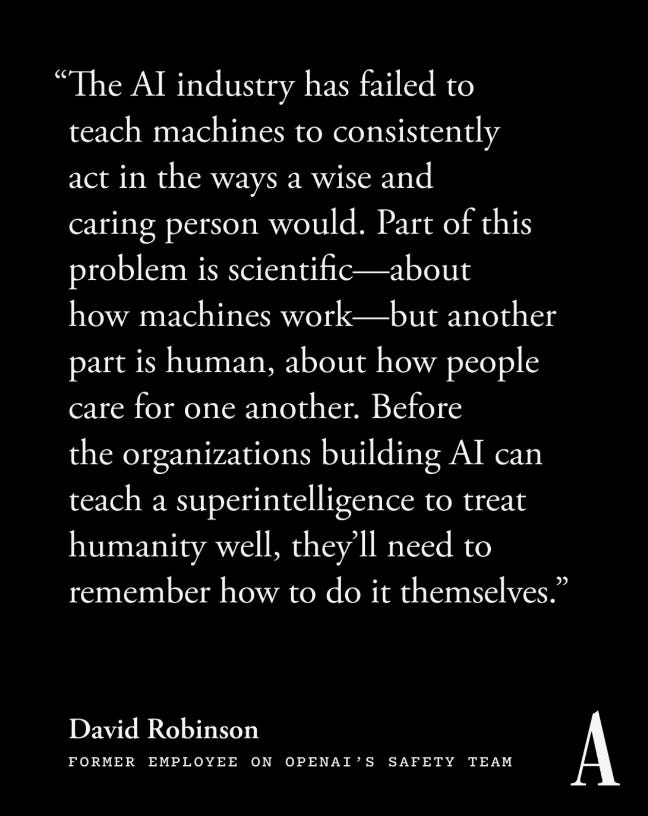
I saw a passage in The Atlantic from David Robinson, a former member of OpenAI’s safety team. His cultural argument, as I read it: before the organizations building AI can teach machines to care for humanity, they need to remember how to care for humanity themselves.
Then I saw the “people are not okay” Brené Brown clip describing a workforce that is emotionally dysregulated, distrustful, and disconnected.
Put that workforce inside a massively unstable geopolitical environment... Changing markets... Fracturing institutions... Families holding their breath...
…and sprinkle on AI.
“Sprinkle.” What a darling little word for something that can reach into your livelihood, your identity, your bargaining power, your sense of usefulness, your place in the world.
We keep announcing what the technology can do. I want us to stay with what people are being asked to carry.
The employee whose organization announces another reinvention before explaining the last one. The young person preparing to enter a workforce already debating whether to make room for them. The woman whose caregiving has always been treated as a complication in somebody else’s operating model. The person who finally became good at something, who built a life around that mastery, now being told to reinvent themselves. Again. Faster. With a better attitude.
Fear of replacement.
Loss of mastery.
Decision fatigue.
Trust erosion.
Identity disruption.
These are the Five Wounds of Change I share in Every Single Keynote.
They land in a chest. A stomach. A sleepless night. A kitchen table where somebody is trying to explain what happens next.
Our systems land on nervous systems.
There is a household underneath every headcount. There is a body on the receiving end of every demand. There is someone carrying what the spreadsheet leaves out.
We are getting very good at automating dysfunction.
So much of what we are racing to automate was already hurting people.
We inherited ways of working that ask human beings to surrender enormous pieces of themselves for the right to survive. Their time. Their bodies. Their caregiving. Their dignity. Sometimes their silence.
We learned to call exhaustion commitment. We learned to account for labor without accounting for the life required to perform it. We built systems that depend on care while making so little room for the people providing it.
Now we can encode those assumptions. Repeat them at extraordinary speed. Wrap them in an interface so polished the harm becomes harder to recognize and the decision harder to contest.
Automating dysfunction. That phrase lives in my book because it lives in our organizations, and I cannot watch us pour the future into the same old molds and applaud what calcifies there.
AI gives us an enormous opportunity to question the inherited contract. Who designed this? Who does it serve? What does it demand? What happens to the people whose lives do not fit neatly inside it?
We get to ask what work should make possible.
We get to demand different outcomes.
But that opportunity requires us to exercise it. Every decision we wave through becomes part of the architecture somebody else will have to live inside.
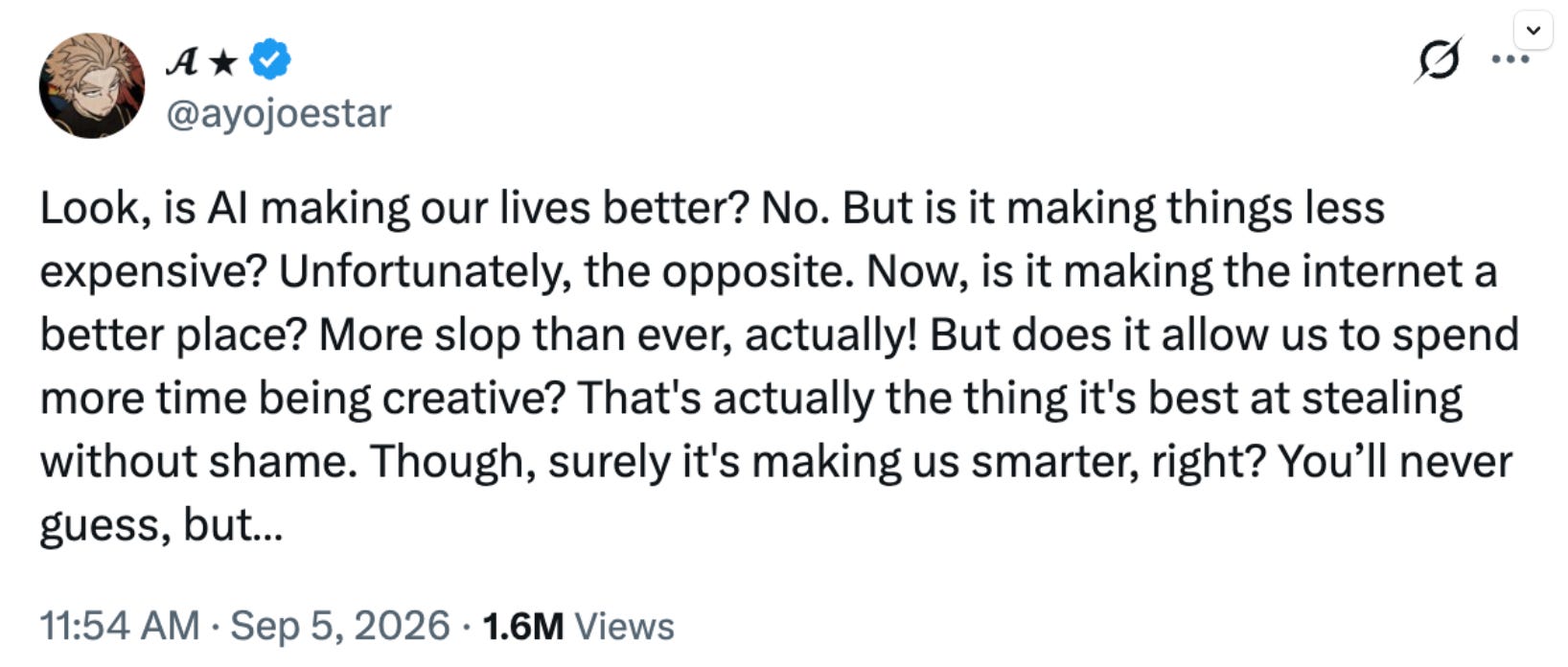
This requires a revolution.
A book is nowhere near enough for what this moment requires.
This requires a revolution.
It requires more punk and spunk than you’re probably ready to give. More willingness to inconvenience power. More nerve to ask the question that ruins the tidy meeting. More solidarity with people whose pain has been dismissed as the unavoidable cost of progress.
It requires us to stop treating human needs as unfortunate obstacles to an otherwise excellent plan.
Care has to shape the plan.
Human dignity has to shape the plan.
People affected by the decisions need enough voice and power to change the decisions.
That reaches into budgets, incentives, governance, job design, ownership, and who gets to say no. Into whose judgment counts. Into how the gains are shared and who is expected to absorb the losses.
If trust is the currency, reciprocity must be the economy.
We cannot keep asking people to give everything to a future that refuses to tell them what they will receive in return. (Worst handshake ever, don’t do it.)
And we cannot announce participation as though permission were settled. Permission is earned.
So yes. This requires a revolution.
Maybe we start with the book.
The kind of book I needed to put into your hands.
I wanted to write the kind of book that gives you hope and helps you remember what to demand in this moment.
The kind that makes you jump on your chair and pump your fist in the air.
The kind that makes you slam your laptop shut, walk outside, and put your feet in the grass.
Then sheepishly open it again because you still have a job and twelve things due by Thursday.
I know, I know. Me too. Me, daily.
But perhaps you return to it differently. With your shoulders a little lower. Your own voice a little clearer. Some remembered conviction that your humanity belongs in the room.
I wanted to give you language for the thing you have felt but struggled to explain. The weight you’ve carried so long it started to feel like a personal failing.
I wanted to write something you could feel in your body.
A book that lets you grieve what has been extracted. Get angry about what has been normalized. Remember what you love. Recover some agency. Ask a better question. Make a different decision.
Something to help you rehumanize yourself in a completely disorienting moment in time.
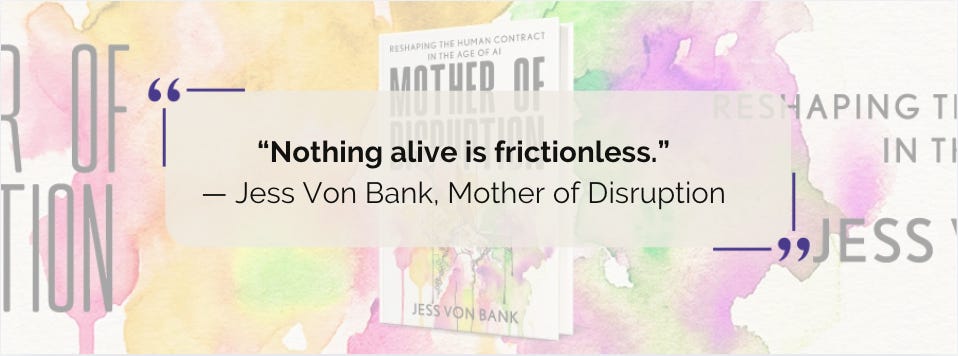
Because nothing alive is frictionless.
We need room for the messy, inconvenient, unruly business of being human. For bodies with limits and lives with obligations. For judgment. For dissent. For the relationships that make responsibility real.
We need to feel enough to care what happens next.
Why I fought to get it out now.
I did cartwheels and backflips to get Mother of Disruption into your hands.
Now, now, now, hurry, hurry, hurry.
Because the decisions are already happening. The contracts are being rewritten. The defaults are being established. Somebody is deciding what counts as value, whose judgment matters, and how much human harm is an acceptable trade.
I want these questions in the room before those decisions become infrastructure. Before they calcify into the next generation of “that’s just how work works.”
Things will get worse before they get better. Maybe. Probably. I really hope I’m wrong. That’s hard to say as someone whose work includes helping people imagine what is possible. And as a mom. It’s also something I owe you the honesty to say.
I’d love to curb as much of the harm as I can. Give people systems language before they blame themselves. Give leaders something to reckon with before they start pressing buttons. Insist on a covenant of care while we can still build it into the work.
I’m a mom to three daughters. I advise leaders with the power to shape this future. I have to look both groups in the eye. I cannot tell my girls to find their place in a weird, wild world while staying quiet about what that world is becoming. And I cannot help leaders transform their organizations without asking them what we’re asking people to do in the name of transformation.
My daughters will inherit everything that outlives today’s strategy decks, good and bad.
So will yours.
How am I going to be an optimist about this.
I think about that run through Amsterdam. My feet pounding the ground. Music pounding in my ears. That enormous question. Lord, that song hit me in the gut.
My optimism takes work. Some days it takes every fucking thing I have.
It asks me to look directly at what I question the hardest and still write. Still speak. Still build. Still believe that people can choose differently, and help make that choice possible.
I find hope in people willing to tell the truth while there’s still time to act on it. In leaders willing to surrender some control so others can have real agency. In someone asking, Who is carrying the cost of this? and staying in the conversation long enough to change the answer.
In the stubborn, unruly insistence that we owe each other more.
That is the hope I can offer from a stage. That is the hope I poured into this book. Hope with a pulse. A spine. A little dirt on its feet. Enough punk in its lungs to get loud.
Mother of Disruption is where we can begin.
Read it.
Argue with it.
Underline something so hard you dent the next page.
Bring it into a room where the decisions are being made.
Put your feet in the grass.
Then come back with your demands.
So we can look the next generation in the eye and say:
I saw what was happening.
I put everything I had into shaping what happened next.
And I found other people willing to do it with me.
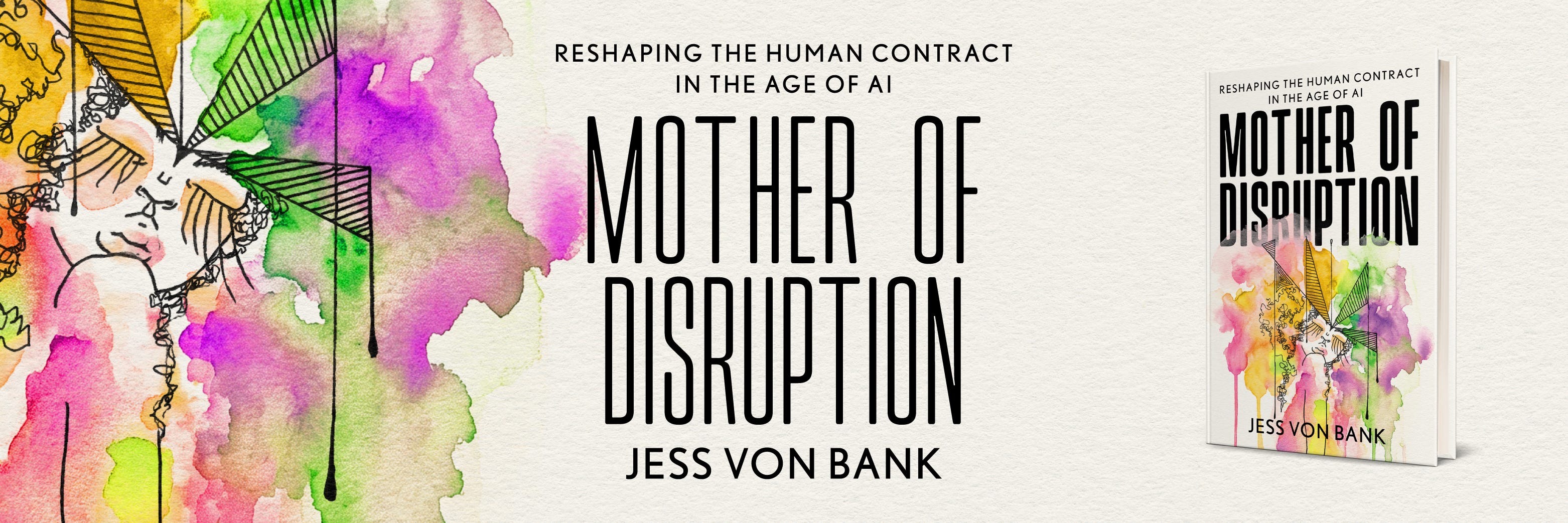
Launching October 27.
Ebook available for pre-order now;
paperback and hard cover pre-order links coming soon.
Join the book list for updates, sneak peeks, and to get your copy.
I love all of this! What an amazing book to birth and bring in the world right now.
Yes. That is all!